
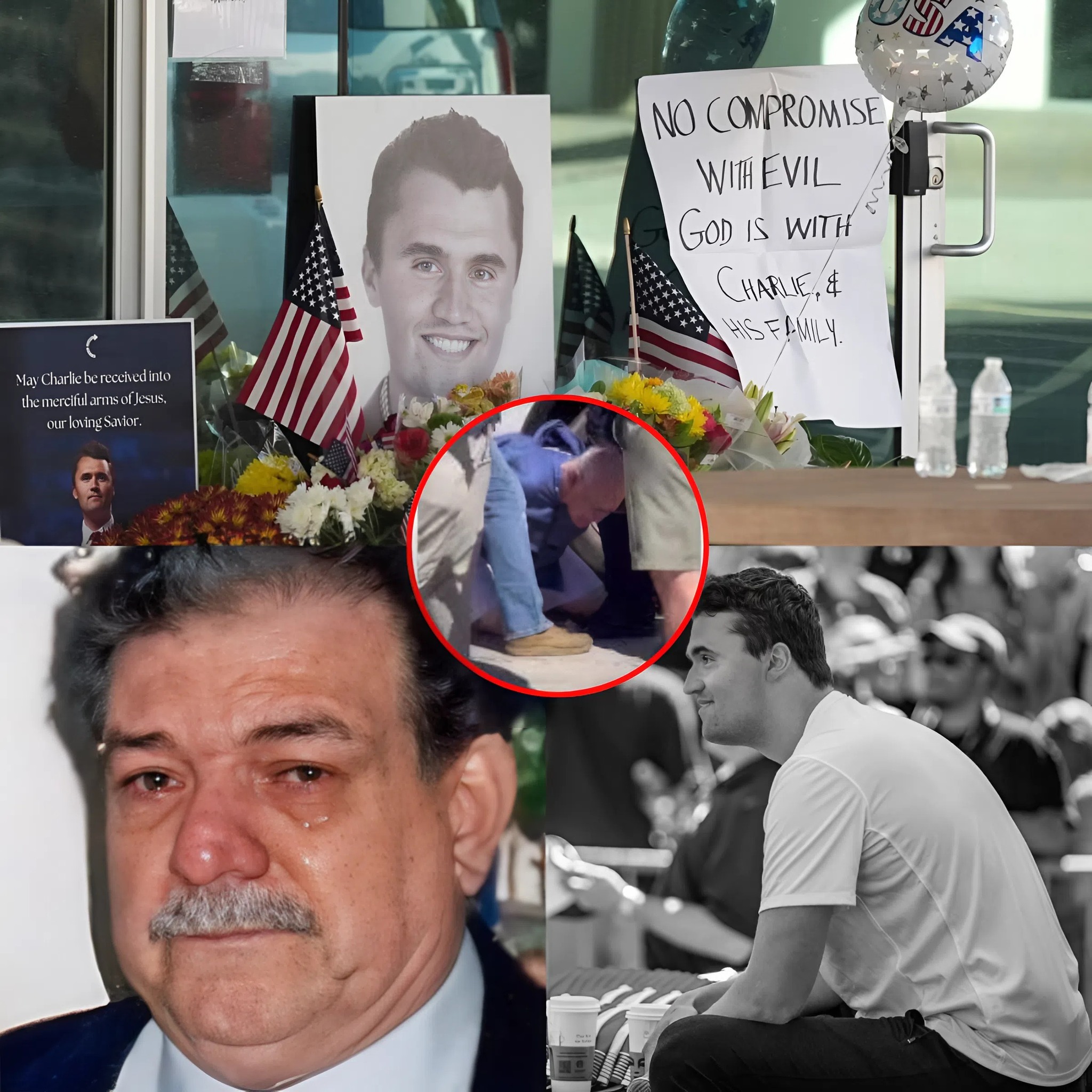
In the quiet town of Wheaton, Illinois, where the autumn leaves painted the streets in hues of gold and crimson, a tragedy unfolded that would etch itself into the hearts of those who knew the Kirk family. Charlie Kirk, the young and vibrant leader of Turning Point USA, had been a beacon of hope for conservative youth across America. At just 31 years old, he had risen to prominence, his voice echoing through rallies and podcasts, championing values of freedom, faith, and family. But on a crisp September morning, that voice fell silent forever.
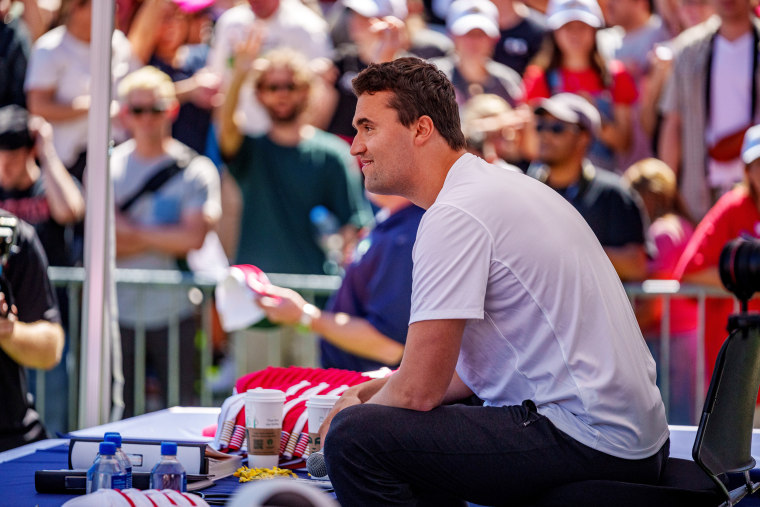
The news broke like a thunderclap: Charlie Kirk had passed away unexpectedly. The cause was later revealed to be a sudden cardiac arrest during a late-night work session at his home. Friends, colleagues, and millions of followers were left in stunned disbelief. Social media erupted with tributes, hashtags like #RIPCharlieKirk trending worldwide. Yet, amid the public mourning, it was the private anguish of the Kirk family that carried the deepest wounds.
David Kirk, Charlie’s father, was a man of 72 years, his once-robust frame now weathered by time and the quiet burdens of a life dedicated to family and faith. David had been Charlie’s steadfast supporter, the one who drove him to his first political meetings as a teenager, who prayed with him before every major speech. To the world, David was the proud patriarch, often seen in the background of Charlie’s events, his eyes gleaming with paternal pride. But on the day of Charlie’s funeral, that pride shattered into irreparable pieces.
The funeral was held at the First Baptist Church of Wheaton, a modest yet reverent venue that had been the spiritual home of the Kirks for generations. The pews overflowed with mourners—politicians from the Republican Party, young activists clutching Turning Point USA pins, and everyday folks whose lives Charlie had touched. The casket, adorned with white lilies and an American flag, stood at the front, a stark symbol of loss. Charlie’s wife, Erika, sat composed yet hollow-eyed, her hand resting on the arm of their young daughter, who was too young to fully grasp the void left behind.
As the service progressed, with eulogies painting Charlie as a modern-day warrior for truth, David Kirk sat in the front row, his hands clasped tightly in his lap. His wife, Gracie, Charlie’s mother, wept softly beside him, her sobs muffled by a lace handkerchief. The pastor’s words about eternal life and heavenly rewards offered little solace in that moment. When it came time for the family to approach the casket for a final farewell, David rose unsteadily, his knees protesting the effort. He shuffled forward, leaning on his cane, his face a mask of profound grief.
It happened in an instant. As David reached the side of the coffin, his hand trembling as it touched the cold wood, a wave of dizziness overtook him. His vision blurred, the room spinning like a carousel gone mad. With a gasp, he collapsed to the floor beside his son’s resting place, his body crumpling in a heap. Gasps rippled through the congregation. Erika rushed forward, followed by church ushers who knelt to assist. “David! Oh God, David!” Gracie cried, her voice piercing the stunned silence.
Paramedics were called immediately, but in those chaotic seconds, something extraordinary occurred. As David lay there, his chest heaving, his eyes locked onto Charlie’s serene face through the half-open lid of the casket. In that raw, vulnerable moment, words escaped his lips that no one had ever heard before. “Charlie… my boy… it was me. I did it. The secret… I kept it from you all these years. Forgive me,” he whispered, his voice hoarse and broken, audible only to those closest—Erika, Gracie, and a few family friends.
The revelation hung in the air like a storm cloud, shocking those who heard it. What secret could a dying man— for in that collapse, it seemed as if David teetered on the edge of his own end—unburden himself with now? As the paramedics worked to stabilize him, lifting him onto a stretcher and wheeling him out to the ambulance, whispers began to spread. The funeral service, meant to honor Charlie, had become the stage for an even greater drama.
David was rushed to Northwestern Medicine Central DuPage Hospital, where doctors diagnosed him with a severe episode of hypotension exacerbated by emotional stress and an underlying heart condition. He was stabilized, but the doctors warned the family that his age and frailty made recovery uncertain. In the sterile waiting room, surrounded by the beeps of monitors and the scent of antiseptic, the Kirk family gathered. Erika, still in her black mourning dress, held Gracie’s hand as they waited for news. Charlie’s siblings—his older sister, Sarah, and younger brother, Michael—arrived hastily, their faces etched with worry.
When they were finally allowed to see David, he lay pale and weak in the hospital bed, an IV dripping fluids into his arm. His eyes, though tired, held a new clarity, as if the collapse had purged something long suppressed. “I have to tell you all,” he said weakly, his voice gaining strength with each word. “It’s time. The secret I’ve carried since before Charlie was born. It could change everything for our family.”
The room fell silent. Gracie squeezed his hand, her eyes wide with a mix of fear and curiosity. “David, what are you talking about? You’ve never mentioned any secret.”
David took a deep breath, his gaze drifting to a photo on the bedside table—a family portrait from happier times, with Charlie grinning in the center. “It starts back in 1985, before I met you, Gracie. I was a different man then—restless, searching. I got involved in things I shouldn’t have. Underground dealings, nothing violent, but shady enough to haunt me. I was part of a small network smuggling rare artifacts out of Eastern Europe during the tail end of the Cold War. Not drugs or weapons, but old manuscripts, paintings—things the regime was hoarding.”
The family leaned in, incredulous. David continued, his words measured. “One night, in Prague, I came across a chest. Inside was a collection of documents—letters, ledgers—from a forgotten branch of the Kirk lineage. Our family isn’t what we thought. We’re descendants of Scottish immigrants who fled persecution in the 1700s, but there’s more. These papers revealed that the original Kirk who came to America wasn’t just a farmer. He was a Jacobite rebel, involved in plots against the English crown. And hidden among the papers was a map—a map to a lost fortune. Gold and jewels stashed away during the uprising, never recovered.”
Erika’s eyes widened. “A fortune? David, why hide this?”
“Because it was dangerous,” David replied, his voice trembling. “The network I was in wanted the map for themselves. I stole it to keep it from them, but I couldn’t destroy it. I buried it—literally—back in Wheaton, under the old oak tree in what was then my family’s backyard. The same tree that’s still in our garden. I thought I’d retrieve it later, use it to build a better life for us. But then I met you, Gracie, and Charlie came along. I wanted to leave that life behind. The guilt ate at me, but I swore to take it to my grave.”
Michael, the youngest, shook his head. “Dad, this sounds like a movie. Is it real? Could it still be there?”
David nodded slowly. “As real as the pain in my chest right now. The map marked the spot precisely. If it’s still there, untouched by time or development, it could be worth millions. But more than money, it’s our heritage. Charlie always spoke of legacy, of fighting for what’s right. This secret… it could fund causes he believed in, secure the future for his daughter.”
The weight of the revelation settled over the room. Sarah, ever the practical one, pulled out her phone. “We need to check. But carefully—no digging up the yard without permission, and we have to verify authenticity.”
As David rested, the family huddled in discussion. Erika, thinking of Charlie’s mission, saw potential. Turning Point USA had always struggled with funding; this could be a boon. But doubts lingered. Was the map genuine? Had the passage of decades eroded the treasure? And what of the legal ramifications—smuggled artifacts might attract authorities.
The next days blurred into a frenzy of action. With David’s hospital stay extended, the family obtained permits to excavate the backyard of the Kirk family home, now owned by Sarah. Archaeologists and historians were consulted discreetly, their excitement palpable at the prospect of uncovering Jacobite relics. On a foggy afternoon, under the watchful eyes of experts, they gathered around the ancient oak tree, its roots sprawling like veins into the earth.
Shovels broke ground carefully, layer by layer. Tension mounted as they delved deeper, the soil rich and undisturbed. At three feet down, a rusted metal box emerged, caked in dirt. Hearts pounded as they pried it open. Inside, wrapped in oilcloth, was the map—yellowed but intact—along with a small pouch containing a single gold coin, stamped with the Jacobite insignia.
Tears flowed freely. “It’s real,” Gracie whispered, holding the coin. Experts later confirmed its authenticity: 18th-century Scottish gold, part of a hoard rumored to be worth over $5 million in today’s market. The map led to coordinates in the Scottish Highlands, where a team was dispatched to recover the rest. What they found was breathtaking: a hidden cache in a sea cave, guarded by tides and time—coins, jewels, even a ceremonial sword etched with the family crest.
News of the discovery leaked, transforming the Kirk family’s tragedy into a tale of redemption. Media outlets, once focused on Charlie’s death, now buzzed with stories of the “Kirk Legacy Unearthed.” Conservative circles hailed it as divine intervention, a sign that Charlie’s spirit lived on. Erika established the Charlie Kirk Heritage Foundation, using the fortune to expand Turning Point’s reach, funding scholarships, rallies, and youth programs.
David, recovering slowly, watched from his hospital bed as the world learned of the secret. “I thought it would destroy us,” he told visitors. “But it healed us. Charlie would be proud.”
Yet, the revelation brought challenges. Descendants of other Jacobite families came forward, claiming shares. Legal battles ensued, but the Kirks prevailed, emphasizing stewardship over ownership. Personally, it mended old wounds. Michael, inspired, pursued history studies; Sarah documented the find in a book. Gracie found peace, seeing it as Charlie’s final gift.
In the end, the collapse beside the coffin wasn’t just a moment of pain—it was a pivotal turning point. The secret, long buried, unearthed not just treasure, but a renewed sense of purpose for the Kirk family. As winter snow blanketed Wheaton, the oak tree stood taller, a silent witness to legacy reborn from loss.