
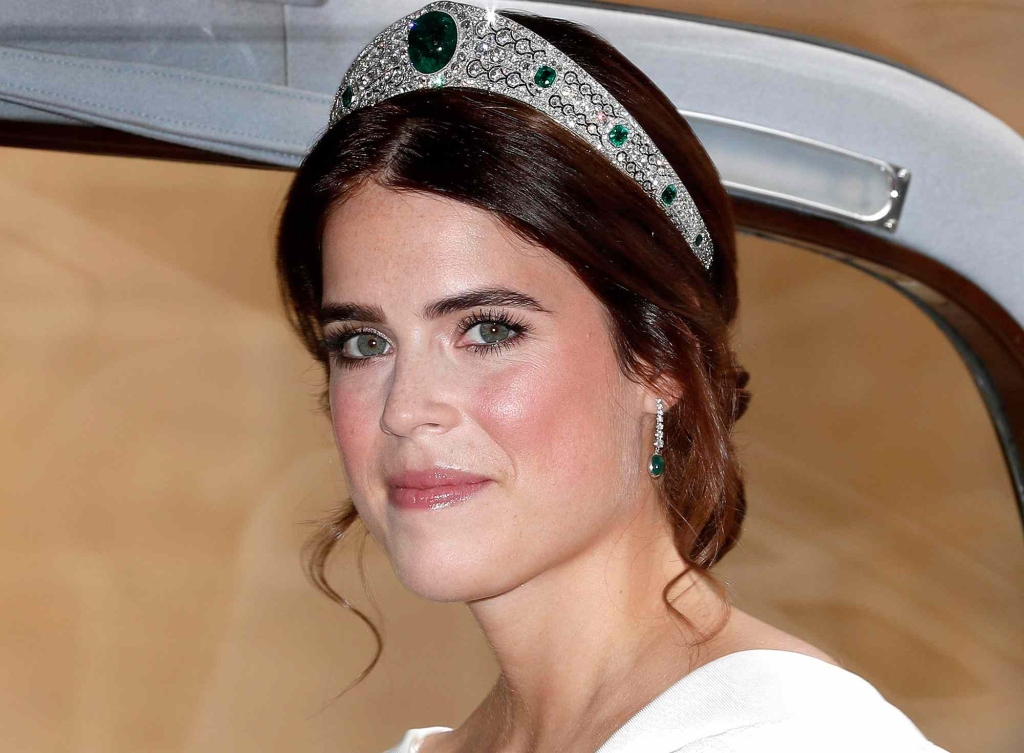
Princess Eugenie, known for her grace and poise, was once considered one of the royal family’s most scandal-free members, a princess who seemed to prioritize love over legacy. Her marriage to Jack Brooksbank in 2018 was widely regarded as a fairy tale—a romance that stood apart from the typical royal union, defined not by obligation but by genuine affection. It wasn’t a love story born out of duty; instead, it was one forged through choice and mutual respect. Their connection had begun quietly in 2010, during a ski trip in Switzerland, far removed from the glitter of royalty. Jack, a bartender-turned-brand ambassador, and Eugenie, a princess who desired normalcy, found something rare in each other. Their wedding was an intimate celebration, unburdened by the royal machinery, reflecting a love that appeared grounded, real, and heartfelt.

However, behind the facade of happiness, the cracks in their relationship began to appear. By 2020, Jack’s burgeoning role in the high-end tequila industry took him to celebrity-laden events, parties, and luxury launches. While Eugenie remained focused on motherhood and charity work, Jack’s life increasingly drew him into glamorous circles, and the imbalance between them began to show. His frequent absences and jet-setting lifestyle, increasingly at odds with Eugenie’s more restrained existence, fueled rumors of a growing divide. Then came the images that would change everything: Jack was photographed on a yacht in the Mediterranean, surrounded by glamorous women, a champagne flute in hand, smiling and seemingly carefree. The photos quickly went viral, and the media did not hesitate to paint a picture of betrayal. With Eugenie at home in Windsor, caring for their infant son, the optics were undeniably damaging.
The scandal spread like wildfire, with the media dissecting every frame of the photographs. The once humble and kind-hearted Jack, seen by many as a grounded man, now appeared reckless and disrespectful. Eugenie, however, chose silence. There were no public statements, no interviews, and no emotional outbursts. Behind closed doors, the toll on her was undeniable. She was visibly strained, her smile no longer reaching her eyes. Public appearances with Jack became fewer, and when they did appear together, the warmth that once marked their relationship was conspicuously absent. The world watched as the fairy tale that had once been so deeply admired seemed to unravel in real-time.
Inside the palace, reactions were swift. Prince William and Catherine, keen to protect the monarchy’s reputation, distanced themselves from the scandal, while Prince Harry, always close to Eugenie, reportedly reached out with words of support. The fallout from the photos wasn’t just personal for Eugenie—it had become a matter of royal duty and public perception. The institution could not afford such damage to its image, and the response from Jack, a brief and vague statement downplaying the incident, only made matters worse. His refusal to acknowledge the impact on Eugenie felt dismissive to many, and it compounded the sense of betrayal.
As time passed, Princess Eugenie continued to fulfill her royal duties, maintaining a composed public image. She resumed her charity work, giving speeches, and even attending high-profile events. Yet, those who observed closely saw subtle shifts in her demeanor. Her clothing became bolder, her expressions more serious, her demeanor more assertive. She was no longer the sweet, quiet royal but a woman reclaiming her identity, shifting away from the role of a wife in crisis to a modern royal standing on her own terms. She didn’t need to speak about the scandal; her silence spoke volumes. Her actions, whether at charity galas or environmental initiatives, radiated resilience and strength, demonstrating that she was moving forward without allowing her personal pain to define her.
Behind this shift was a powerful evolution. Eugenie was no longer just a woman hurt by betrayal; she had transformed into someone who had embraced her own voice and found her strength in the silence. She was redefining what it meant to be royal in a modern world, where personal integrity and authenticity matter more than ever. Her experience in the spotlight, both painful and transformative, served as a reminder that even those who live under the constant gaze of the public can find moments of quiet strength and personal growth.
Her journey was not without its difficulties. Her family, especially her mother, Sarah Ferguson, offered support, urging Eugenie to stand her ground while keeping her heart open. But despite the ongoing pressure, Eugenie remained steadfast. Her emotional journey was not about seeking public sympathy but about carving out a space for herself amidst the chaos. She had a choice: to crumble under the weight of the scandal or to rise above it. And rise she did.
As months passed, Eugenie’s transformation became evident. She distanced herself from Jack, not through formal separation but through a subtle shift in their public appearances. She moved with more purpose, her posture more confident, her gaze more direct. She didn’t need Jack to validate her; she had learned to stand alone, reclaiming her life and her voice. While Jack’s public appearances remained limited, Eugenie was no longer defined by their relationship. She had emerged from the storm, not just as a royal wife but as a woman who had weathered heartbreak and come out stronger.
In the end, the world watched not for a dramatic reconciliation but for Eugenie’s quiet strength. She had become a symbol of resilience, showing that even in the face of public betrayal, personal growth and transformation are possible. Her story is a reminder that real strength lies not in perfection, but in the ability to rise after a fall. Princess Eugenie’s silence, once seen as a shield, had become her power, and in that power, she redefined herself not just as a member of the royal family but as a woman who could chart her own course, regardless of the headlines.