
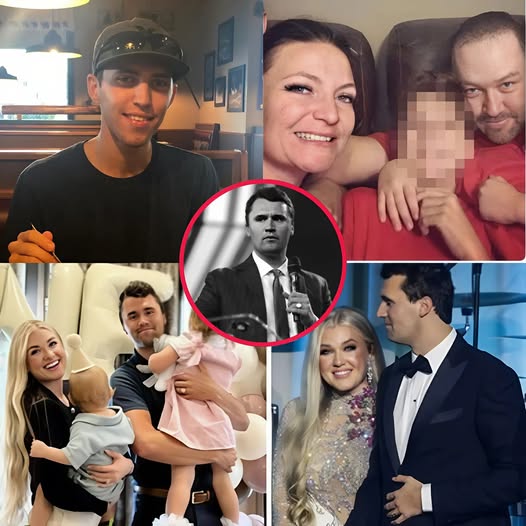
The United States continues to grieve the sudden and tragic loss of conservative commentator Charlie Kirk. But amid the tributes, speeches, and public mourning, one moment has cut deeper than any headline or broadcast: the desperate cry of his young son.
According to family friends present at the time, Charlie Kirk’s little boy — too young to fully understand death — saw his father’s image appear on television during news coverage of the tragedy. In an instant, the child’s innocence collided with unbearable reality.
“I NEED DADDY!” he sobbed, reaching his arms toward the screen as if his father might step out and hold him again.
Witnesses described the scene as “unimaginable” — a heartbreaking picture of grief in its purest form. The boy’s cries echoed through the room, leaving those nearby in stunned silence before many broke down in tears themselves.

A Child’s Grief, A Nation’s Pain
The loss of a parent is devastating at any age, but for a young child, the absence of comprehension makes it even more painful. Experts say children in moments of grief often cling to images, sounds, or routines that remind them of security — and for Charlie Kirk’s son, seeing his father’s face on TV sparked hope that he could still be near.
“Children don’t grieve in the same linear way adults do,” explained one child psychologist. “For them, it’s sudden waves of confusion and longing. That plea — ‘I need Daddy’ — is not just words. It’s their entire world breaking apart.”
Erika Kirk’s Silent Struggle
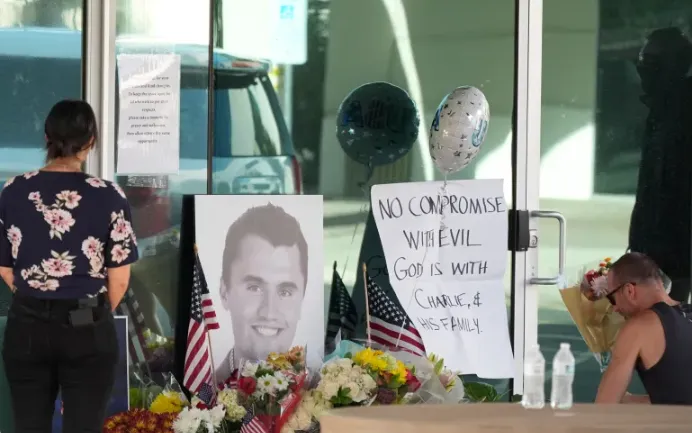
Kirk’s widow, Erika Lane Frantzve, has faced unimaginable pressure: mourning her husband while shielding their children from the crushing weight of loss. Sources close to the family say Erika held her son tightly in that moment, whispering comfort even as her own heart was breaking.
“She didn’t have the words,” one family friend shared. “All she could do was hold him and cry with him.”
America Weeps With Them
Across social media, the story of the child’s desperate cry spread quickly, sparking an outpouring of sympathy and prayers. Messages from parents, many saying they couldn’t read the story without crying, flooded online spaces.
“That broke me,” wrote one user. “No child should ever have to beg for their father like that.”
“We cry with you, little one,” another wrote. “The whole nation does.”
A Legacy Beyond Politics
For years, Charlie Kirk was a polarizing figure in American politics. But in death, the images of his grieving family have cut past partisanship, reminding millions that beyond public roles and debates, he was first and foremost a husband and father.
The sound of his son’s heartbreaking words — “I need Daddy” — now echoes as a painful reminder of what has been lost, not just to a family, but to the human story of love and absence.
As America watches, one truth remains unshakable: the tragedy of Charlie Kirk’s death is not written only in headlines, but in the tears of a little boy who just wanted his father back.
A Scene That Broke the Silence
The funeral of commentator Charlie Kirk was always going to be an emotional event. Family, friends, supporters, and political figures gathered under the weight of grief. But what unfolded at the casket — with cameras rolling and mourners standing in stunned silence — turned a private goodbye into a moment of collective heartbreak that spread across the nation.
It happened when Erika Kirk, Charlie’s widow, approached the casket with her young daughter at her side. The crowd leaned forward. The chapel, already silent, seemed to hold its breath. Then, in a voice so small it almost disappeared into the air, the little girl asked her mother a simple, devastating question.
Two words. Just two words.
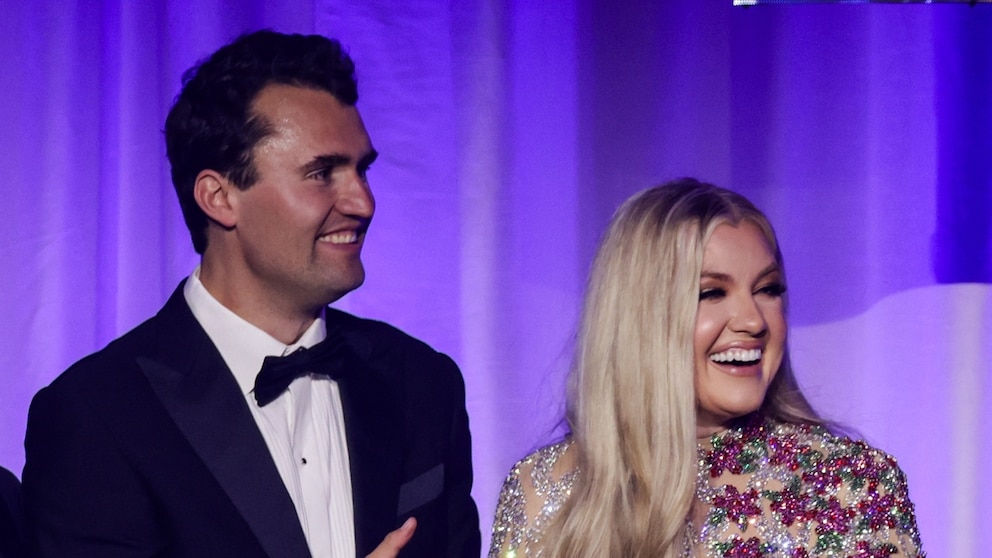
The question was not repeated for the cameras. But those who stood close enough said they will never forget the way Erika froze, her body trembling as if struck by lightning. Seconds later, she collapsed against the casket, her sobs echoing off the walls.
A Daughter’s Innocence, A Mother’s Breaking Point
Those who witnessed it described a scene almost too painful to recount.
“Everyone had been crying quietly,” one attendee recalled, “but when her daughter spoke, everything stopped. And when Erika collapsed, it was like the entire room broke at once.”
Her daughter clutched her arm, confused and frightened, while relatives rushed to steady Erika. But the grief was too heavy. For a moment, she seemed unable to rise.
That sight — a young widow undone by her child’s innocent words — spread across television screens and social media feeds within hours. Millions of Americans who never met the family found themselves weeping in their living rooms, whispering the same question: How do you ever prepare for a moment like that?
The Haunting Farewell
When Erika finally stood again, her face wet with tears, she placed one hand on the polished wood of the casket. The room fell silent once more.
Her voice was faint but steady enough to carry across the chapel.

“I thought I was ready,” she whispered. “I thought I could stand here and say goodbye the way he deserved. But I wasn’t. I’ll never be ready.”
The words hung in the air, heavy and unforgettable. Witnesses later said they felt like the entire nation had just heard a confession of grief that belonged to them, too.
Moments later, Erika leaned down, her forehead touching the casket, and whispered something only the closest few could hear. Then she stepped back, clutching her daughter tightly, her goodbye complete — but her pain visible to all.
Millions Watching, Millions Weeping
The image of Erika collapsing at the casket has already become one of the defining photographs of the tragedy. News outlets replayed the clip on loop, anchors pausing mid-sentence as their own voices cracked. Online, hashtags of support and grief trended within minutes.
But what truly resonated was not the spectacle of loss, but the raw humanity of it. A mother, a wife, trying to stay strong for her child and for herself, only to find that even strength has its limits when love is torn away too soon.
A Nation Tormented by One Family’s Pain
For supporters of Charlie Kirk, the funeral was a chance to celebrate his life, his words, and his impact. For others, it was a glimpse into the unbearable cost of tragedy that no politics, no speeches, and no commentary can soften.
But for everyone — no matter their background or belief — Erika’s collapse at the casket was something else entirely: a reminder of the universality of grief.
Her daughter’s two-word question will never be forgotten by those who heard it. Nor will Erika’s whispered farewell.
“I thought I was ready. I wasn’t.”
In those words, a nation saw its own fragility. And in her tears, it saw its own reflection.